
India's smartphone market grew by three per cent year-on-year (Y-o-Y) in volume in the third quarter (Q3) of calendar year 2024, while its value surged by 12 per cent Y-o-Y to reach an all-time record for a single quarter, according to a report by research firm Counterpoint. The value growth was driven by an ongoing premiumisation trend, while the increase in volume was driven by an earlier onset of the festival season compared to the previous year.

Similar discounts compared to online led to a spike in demand for offline, where customers can get a more personal and hands-on product experience.

It will be exclusively available on Amazon.

The number of new entrants is decreasing since 2015, as Indian market matures

India doubled its exports of smartphones to $11.1 billion (about Rs 91,000 crore) in 2022-23 (FY23) over the previous year's figure of $5.48 billion (Rs 45,000 crore), thanks largely to the Apple juggernaut, according to data from the India Cellular and Electronics Association (ICEA). Union Minister for Communications, Electronics & IT Ashwini Vaishnaw said: "With the doubling of exports of smartphones to over Rs 90,000 crore, India is well on its way to becoming a leader in the global mobile device market." On the flip side, despite the government prodding Chinese companies to export more, their smartphone shipments fell steeply by 26 per cent from $214 million in FY22 to $157 million in FY23.


The SE is up against some sweet deals from China and South Korea, not to mention Apple's own XR.

Counterpoint Research estimates that Xiaomi will end CY23 with a volume market share in CY23 to 15 per cent, pushing the Chinese company, which has faced numerous challenges and scrutiny from investigative agencies, to the third place.
Shipment of 5G smartphones in the country continues to gain traction and such devices accounted for 22 per cent market share in the third quarter of 2021, according to CMR. As per CMR's India Mobile Handset Market Review Report for Q3 2021, more than 20 5G-capable smartphones were launched over the course of the quarter.

The scales started tilting in favour of smartphones in 2014, when a slew of new, yet vibrant, brands entered the market, with their competitively priced offerings helping smartphones become the indispensable device that it has turned into today.

Foxconn has said it is aiming to develop 10-12 facilities in India, including factories and data centres, by 2020

Oppo and the BCCI had signed a five-year team sponsorship deal worth Rs 1,079 crore which was announced by the Board on March 7 with the contract commencing on April 1.

Samsung makes the largest number of non-4G feature phones in India

With tensions brewing between India and China at the border, the Confederation of All India Traders has urged celebrities to stop endorsing Chinese products.

Whoever can make acquiring smartphones more affordable will win the sales game.

Bharti Airtel on Thursday said its 5G services have gone live in eight cities of Delhi, Mumbai, Chennai, Bengaluru, Hyderabad, Siliguri, Nagpur and Varanasi. The customer availing 5G services will have to pay as per their existing 4G plan, it said. "Airtel has been at the forefront of India's telecom revolution for the last 27 years.

According to analysts, most of the growth in the smartphone space will come from existing users, who will be lured to upgrade their handsets as new features and technologies turn existing features redundant, says Arnab Dutta.
Oppo's FDI application approved for single-brand retail trading

The authors look at some of these android phones will help you decide which one to buy.


Even as the government's move to hike import duties on 45 items is seen as a sign of protectionism, the prime minister was himself involved in the process.

Apple and Samsung are international players and should work as a team with domestic companies to transform India into a global powerhouse: IT Minister Ravi Shankar Prasad.

After the government backtracked on its plan to impose Customs duty on pricier components, Samsung has decided to begin production of key mobile parts in Noida from April.

Though leading brands like Samsung, Apple, Xiaomi, OnePlus, and Oppo managed to absorb the initial lockdown shock and resumed their local production back to 60 per cent, they would likely suffer a 20-25 per cent loss of sales in the October-December quarter.

Lei Jun, founder and CEO of Xiaomi, in an internal letter on Wednesday, announced that the company has sold one million smartphones in the first 18 days of this month in India, state-run China Daily reported.

Industry estimates suggest that the extent of value addition in the handset space remains at a mere 10 per cent. That effectively means, value-wise 90 per cent of all components used in making a handset continues to be imported.
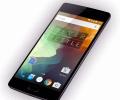
OnePlus announces plans to make in India

Chinese mobile brands are deeply entrenched in the Indian market. A move to bar them may send a bold diplomatic message. But its cost for the local industry is anybody's guess. In the event that Chinese brands face curbs, two handset makers - Samsung and Apple - squarely stand to gain.

Google, in its latest appeal to the Supreme Court, has said the Competition Commission of India (CCI) is protecting Amazon's interests after having complained that India's anti-competition body (CCI) had copied part of a European Commission ruling against it for allegedly abusing the market dominance of Android. The latest twist to the Google-CCI case comes as Google filed an appeal in the Supreme Court on June 26, against the National Company Law Appellate Tribunal's (NCLAT's) March 29 order. The tech giant's contention is that the NCLAT failed to apply the "effect analysis" part in the CCI order.

Smartphone shipment in India declined by 10 per cent to hit a three-year low of 43 million shipment in the July-September 2022 period, market research firm International Data Corporation said on Monday. The 5G smartphone share reached 36 per cent of total smartphones during the reported quarter with 16 million units at a slightly higher average selling price of $393, about Rs 32,000, apiece compared to $377, about Rs 30,600, in the previous quarter. "India smartphone market declined 10 per cent year-over-year (YoY) shipping 43 million units in July-September 2022.

From Samsung to Apple iPhone XR, smartphone firms are showering discounts in April.

Chinese handset maker Xiaomi has begun covering its retail store branding with white 'Made in India' logo amid fears of vandalism at outlets against the backdrop of Sino-India border tension, the All India Mobile Retailers Association said. The association had written to Chinese mobile brands to highlight the threat of vandalism at offline stores by people amid calls for boycotting Chinese products in certain sections.

It had requested the government to grant it 15 years of duty-free import of components to assemble its iPhones in the country, sharing a road map to slowly indigenise products.

The onslaught of Chinese mobile brands is virtually obliterating Indian brands, especially in terms of value. According to industry estimates based on excise and Custom duty trends, the value share of Indian brands (across smartphones and feature phones, operator phone sales - which is mostly Jio phones - and the value of phones smuggled into the country) has dropped to a mere 1.2 per cent in January-October 2021 compared to 25.4 per cent in the calendar year 2015. In the same period, the Chinese have established their domination, hitting a value share of 64.5 per cent, up from 17.8 per cent.

At Rs 8,999, this 'Made in India' budget smartphone competes with Chinese rivals Xiaomi Redmi 4, Nubia N1 Lite and Xiaomi Redmi Note 4. But can it win Micromax the lost ground?
Analysts tracking Apple said the India results were glimpses of what the company could achieve in emerging markets with a right pricing strategy for its products and local manufacturing.

With its new line-up, the firm has managed to touch the right chords, but to regain market share from the established players, Micromax will have to fight a protracted battle.

Cook further said that Apple would like to place retail stores in India and is working with the government to seek approval to do that.

In spite of being attacked from all corners, a faltering supply chain and negative sentiments soaring high among the local consumers, top Chinese smartphone brands gained market share during the most critical phase - the April-June quarter of this year.

The industry is keeping a close watch to see if shuttered factories in China reopen in the coming days and supplies resume sometime this week.
